FDA ASME VV40 Explained: Building Regulatory Confidence in Computational Modelling
The adoption of in silico approaches like computational modelling and simulation (CM&S) is well established in highly regulated industries such as aerospace, automotive, and nuclear engineering, where virtual testing has long been relied upon to support safety-critical design decisions. Within the medical device industry, however, widespread adoption occurred more gradually. Over the past decade, CM&S has become increasingly integrated into the development and evaluation of devices such as cardiovascular stents, heart valves and orthopaedic implants, with studies like those by Bernini et al. demonstrating an end-to-end modelling, verification, and validation for nickel–titanium stents [1]. Building on this foundation, industry focus is increasingly shifting toward drug delivery devices, where rising complexity driven by biologics and high-volume and high-viscosity formulations is placing growing pressure on development pipelines.
Within in silico adoption in the medical device industry, the US Food and Drug Administration (FDA) highlighted CM&S as a key component of its strategic priorities in its 2011 Strategic Plan for Regulatory Science [2]. Since then, the FDA has taken a number of steps to make the regulatory process more transparent and to support the credible use of computational models. These efforts helped pave the way for ASME V&V 40-2018, “Assessing Credibility of Computational Modelling through Verification and Validation: Application to Medical Devices” [3]. Developed by the American Society of Mechanical Engineers (ASME) with contributions from the FDA and other stakeholders, the standard introduces a risk-informed framework for establishing model credibility based on the context of use (COU) and the decisions the model is intended to inform.
This article will look at the core principles of the FDA-endorsed ASME V&V40 framework, describe how the framework establishes credibility, and demonstrate how device engineers may use it practically to verify and validate their simulation models.
What is ASME V&V40?
The ASME V&V40 framework was developed specifically to assess the credibility of computational models used within medical device applications.
Rather than treating all simulations equally, the framework introduces a risk-informed approach that aligns the required level of model credibility with the significance of the decision being made. Not every engineering simulation requires extensive validation activities. On the other hand, simulations supporting high-consequence regulatory decisions may require substantial evidence demonstrating predictive capability.
The framework therefore provides a practical and scalable methodology for determining the verification and validation plan for a simulation. This framework is displayed in Figure 1 below.
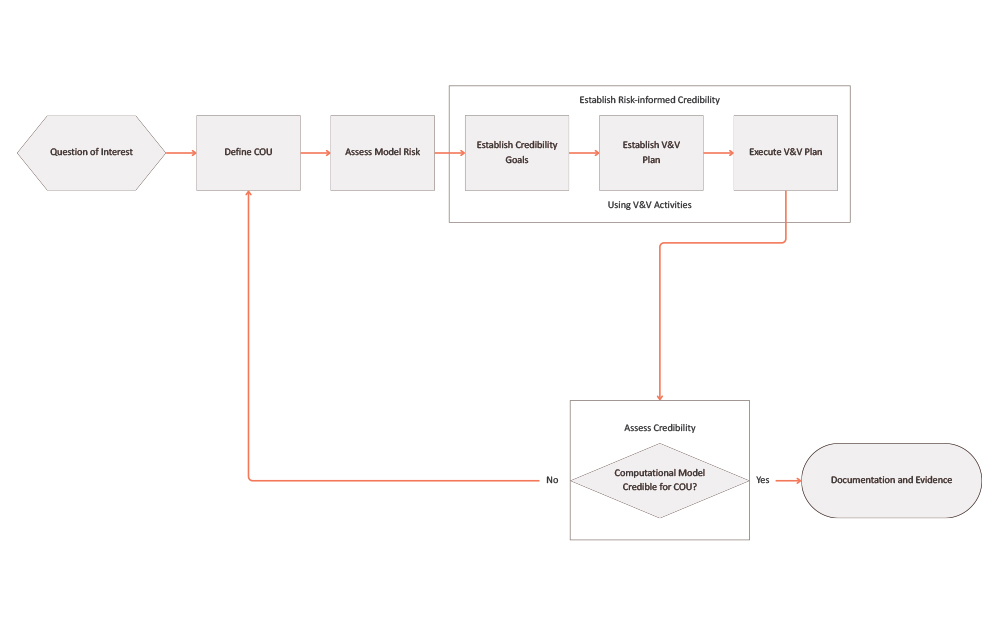
Figure 1. ASME V&V40 Framework for Establishing Risk-Informed Credibility
The Importance of Context of Use (COU)
The starting point within the V&V40 framework is defining the Context of Use (COU). The COU describes the specific question the model is intended to answer and how the results will be used to support decision-making. Defining the COU early is critical because it establishes the scope of the model and determines the level of credibility required. A simulation intended for early-stage concept exploration carries a very different evidentiary burden compared to a simulation intended to replace bench testing within a regulatory submission.
Risk Assessment Within V&V40
Once the COU is established, the next step is assessing model risk. Within V&V40, model risk is determined using two primary factors:
Model Influence
This refers to the extent to which the decision depends on the simulation output. For example:
- Is the model providing supplementary engineering insight?
- Or is it the primary evidence supporting a design claim?
Decision Consequence
This considers the potential impact of an incorrect decision. In drug delivery devices, incorrect predictions could potentially affect:
- Delivered dose accuracy
- Injection performance
- Device reliability
- Usability
- Patient safety
Together, the Model Influence and Decision Consequence determine the required level of model credibility and the rigour of subsequent verification and validation activities. One of the most practical aspects of the framework is that it ensures over-validation of low-risk models can be avoided, whilst promoting sufficient rigour for decision-critical applications.
Verification and Validation Plan
Once the model influence and decision consequence are established, a verification and validation plan can be put in place to generate credibility evidence.
Verification is the process of ensuring that the software accurately implements the mathematical model and that the numerical errors in the simulation are recognised and managed. It emphasises the calculation’s and the code’s integrity.
Validation entails comparing the model’s predictions with real world data, referred to as the comparator. According to the FDA guidelines, validation is defined as a comparison with bench test data that isn’t related to the data used to build or calibrate the model.
All in all, a successful regulatory submission would include evidence submitted for each of the following groups:
- Code verification
- Calculation verification
- Validation evidence
The Future of Model-Informed Device Development
The adoption and integration of modelling and simulation into drug delivery device development is maturing rapidly. The FDA is encouraging the use of in silico approaches in device engineering with the ASME V&V40 guidance providing a clear risk-informed framework for generating credibility evidence to include in regulatory submissions.
A key point to emphasise is that establishing credibility is not binary. Under the V&V40 framework, the objective is to demonstrate that model error is sufficiently low relative to the model influence and decision consequence.
With over two decades working with 18 of the top 20 pharmaceutical companies Crux are industry-leading experts in the application of advanced in silico approaches for the development of robust medical devices including drug delivery devices. We advocate that assessing many scenarios virtually is significantly faster than iterative physical prototyping, enabling efficient evaluation of a broad design space that can be very difficult or near impossible via bench testing alone.
To learn more about how advanced modelling and simulation is applied in the design and development of next generation drug delivery devices, and how to achieve regulatory confidence in your modelling and simulation strategy you can get in touch via projects@cruxproductdesign.com.
References
- Bernini A, et al. Verification, Validation and Uncertainty Quantification of Computational Models for Medical Devices: Application to a Nickel-Titanium Peripheral Stent.
- Advancing Regulatory Science at FDA Advancing Regulatory Science at FDA EXECUTIVE SUMMARY 2. 2011.
- https://www.fda.gov/media/154985/download