How Sustainability Is Shaping Product Development at Crux
Sustainability is becoming an increasingly important consideration throughout product development. From material selection and packaging design to manufacturing efficiency and product lifecycle impacts, development teams are under growing pressure to make informed decisions that balance performance, user needs and environmental responsibility.
At Crux, sustainability influences both how we develop products and how we operate as a business.
Investing in Renewable Energy
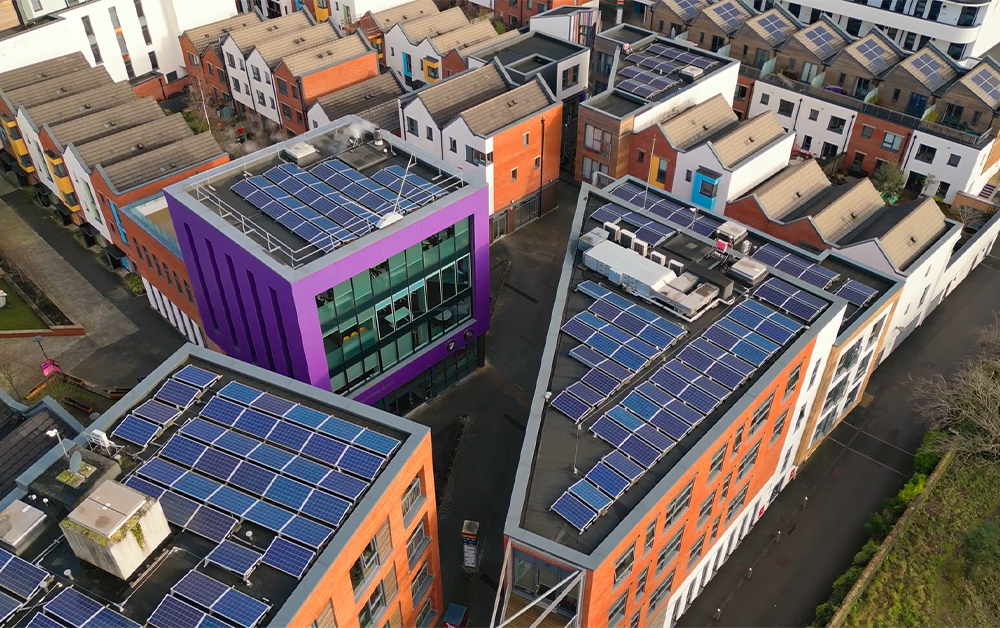
One of the most visible examples of this commitment is the recent expansion of our Bristol facilities with the addition of the new Technology Centre.
Alongside creating additional engineering and research space, the development has enabled us to double our solar generation capacity. Across our sites, Crux now operates 95 solar panels with a combined generation capacity of 25.2 kWp.
The impact has been immediate. Between January and June 2026, our solar installations generated 9,347 kWh of renewable electricity, representing a 45% increase in generation compared with the previous year. During periods of peak generation in May and June, solar energy supplied up to 20% of our total electricity demand, reducing reliance on externally supplied power and supporting our wider emissions reduction objectives.
Designing More Sustainable Products
As a product development consultancy, some of our greatest opportunities to influence sustainability exist through the products we help bring to market.
Sustainability considerations are increasingly integrated throughout our development programmes, helping clients understand the environmental impact of design decisions alongside performance, usability and commercial requirements.
This can include:
- Material selection and reduction
- Design for circularity
- Packaging optimisation
- Product lifecycle considerations
- Manufacturing efficiency improvements
To support this process, our teams use tools that help quantify the energy and carbon impact associated with different design choices, enabling informed, evidence-based decision making throughout development.
Reducing Waste Through Digital Engineering
Advanced digital engineering tools also play an important role in reducing environmental impact.
By leveraging modelling, simulation and virtual testing techniques, development teams can investigate design performance earlier in the process, reducing the number of physical prototypes required and minimising material consumption.
Fewer prototype iterations can also reduce transportation, procurement and manufacturing requirements, supporting more efficient development programmes while maintaining confidence in product performance.
Building Sustainability Into the Way We Work
Alongside client programmes, we continue to invest in initiatives that improve the environmental performance of our own operations.
These include energy-efficient facilities, smart energy monitoring, digital-first working practices and ongoing investment in renewable energy infrastructure. Our broader sustainability strategy is aligned with Science Based Targets initiative (SBTi) validated targets, including our ambition to reduce Scope 2 emissions by 45% by 2030 and achieve net zero by 2050.
Looking Ahead
The expansion of our solar generation capacity is one example of how sustainability continues to shape investment decisions across the business.
More importantly, it reflects a broader commitment to helping create products, services and ways of working that deliver value while reducing environmental impact. As sustainability expectations continue to evolve, we remain focused on combining engineering expertise, digital tools and evidence-based decision making to support more sustainable outcomes for our clients and our business.
Learn more about our plans to tackle climate change in our Sustainability Policy and 2025 Sustainability Report.